As a core infrastructure for smart city construction,
Smart Street Lighting integrate IoT, sensors, cloud computing and other multiple technologies, enabling intelligent lighting, refined management and diversified functions. This article provides professional and authoritative answers to high-frequency questions about project planning, technical principles, engineering implementation, operation and maintenance management, helping industry practitioners and purchasers accurately grasp core information.
1. What components constitute the core technical architecture of Smart Street Lighting?
The core technical architecture of intelligent street lamps is divided into three layers: perception layer, processing layer and execution layer.
- The perception layer collects data such as light intensity, pedestrian and vehicle activity, and environmental parameters through photosensitive sensors, microwave radar/infrared sensors, and environmental sensors (temperature, humidity, PM2.5, etc.).
- The processing layer relies on edge computing modules and cloud platforms to analyze data and generate control instructions through intelligent algorithms, supporting rapid local response and remote centralized management.
- The execution layer realizes operations such as street lamp on/off and brightness adjustment through dimming modules, relays and other equipment.
Among them, IoT communication technologies (4G, LoRaWAN, PLC, etc.) are the key support for device interconnection and data transmission.
2. How is the "adaptive dimming" function of Smart Street Lighting realized?
Adaptive dimming is achieved through a closed-loop logic of "sensor perception + algorithm decision-making + precise execution": First, the photosensitive sensor real-time monitors ambient light intensity to trigger the basic logic of street lamp on/off. Then, it combines microwave radar or infrared sensors to detect pedestrian and vehicle activities within 15-20 meters, and integrates preset time rules (e.g., full brightness from 19:00 to 22:00, energy-saving mode after 22:00), dynamically adjusting brightness output through core algorithms. The brightness can be reduced to 30%-50% when no pedestrians or vehicles are present, and automatically increased to 100% when pedestrians or vehicles are detected approaching, achieving a balance between energy conservation and safety with "bright lights when people come, dim lights when people leave".
3. What are the application differences of different communication technologies (Zigbee, LoRa, NB-IoT) in Smart Street Lighting?
All three technologies are suitable for low-power IoT scenarios, with core differences in coverage range and networking capabilities:
- Zigbee: Suitable for short-distance (within 100 meters) and high-density networking, applicable to small-scale centralized management scenarios such as industrial parks.
- LoRa: Features wide coverage (1-3 kilometers) and strong anti-interference ability, suitable for long-distance deployment in suburban areas and main roads.
- NB-IoT: Relies on operator networks, with wide coverage and no need for self-built base stations, suitable for large-scale urban-level intelligent street lamp networks. However, operator signal coverage and tariff costs should be considered.
In practical applications, adaptive technology should be selected according to the project scenario (park/main road/suburb).
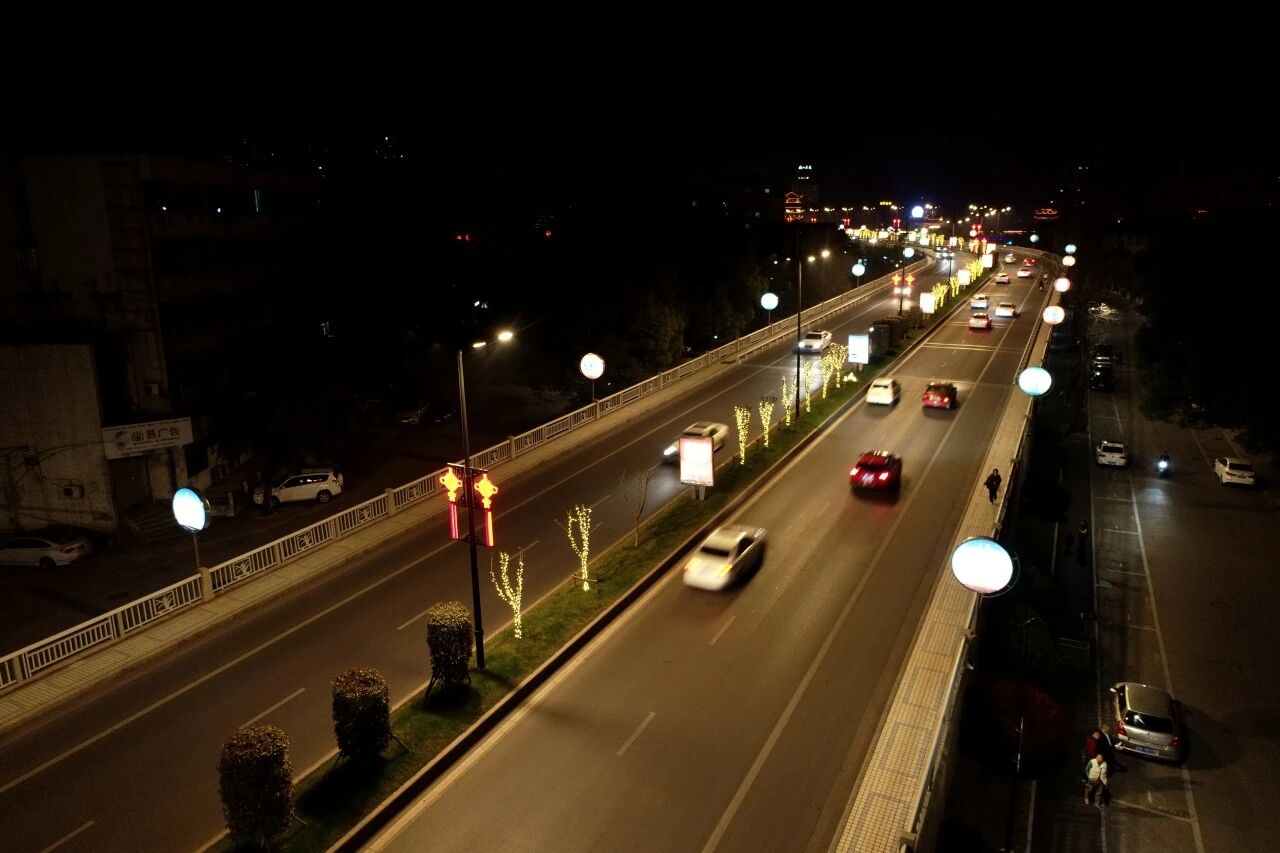
4. What are the core precautions for power supply and communication supporting facilities in Smart Street Lighting project implementation?
Power supply
- Calculate the load according to functional configuration (e.g., increase cable capacity when equipped with charging piles and information display screens) to avoid insufficient bearing capacity of traditional cables.
- Adopt a wiring design with separation of strong and weak electricity to eliminate mixed wiring and improve operational safety in high-humidity and high-temperature environments.
Communication
- Lay optical fibers in advance for functions such as video collection and mobile communication.
- Reserve pipeline resources in the planning stage to avoid increased costs caused by later excavation.
5. What are the possible causes and troubleshooting methods for the "flickering" of Smart Street Lighting?
There are five core causes, and troubleshooting should be carried out from "simple to complex":
(1). Battery issues (solar-powered type): Insufficient power or loose wiring caused by consecutive rainy days; detect battery voltage and fasten connectors.
(2). Sensor failure: Abnormality of photosensitive/radar sensors; clean the sensor surface or replace components.
(3). Wiring problems: Damaged wires, poor contact or short circuit; detect resistance with a multimeter and repair fault points.
(4). Controller issues: Incorrect parameter settings or hardware failure; reset parameters or replace the controller.
(5). Electromagnetic interference: Interference from nearby equipment such as high-voltage lines; add shielding materials or adjust the installation position.
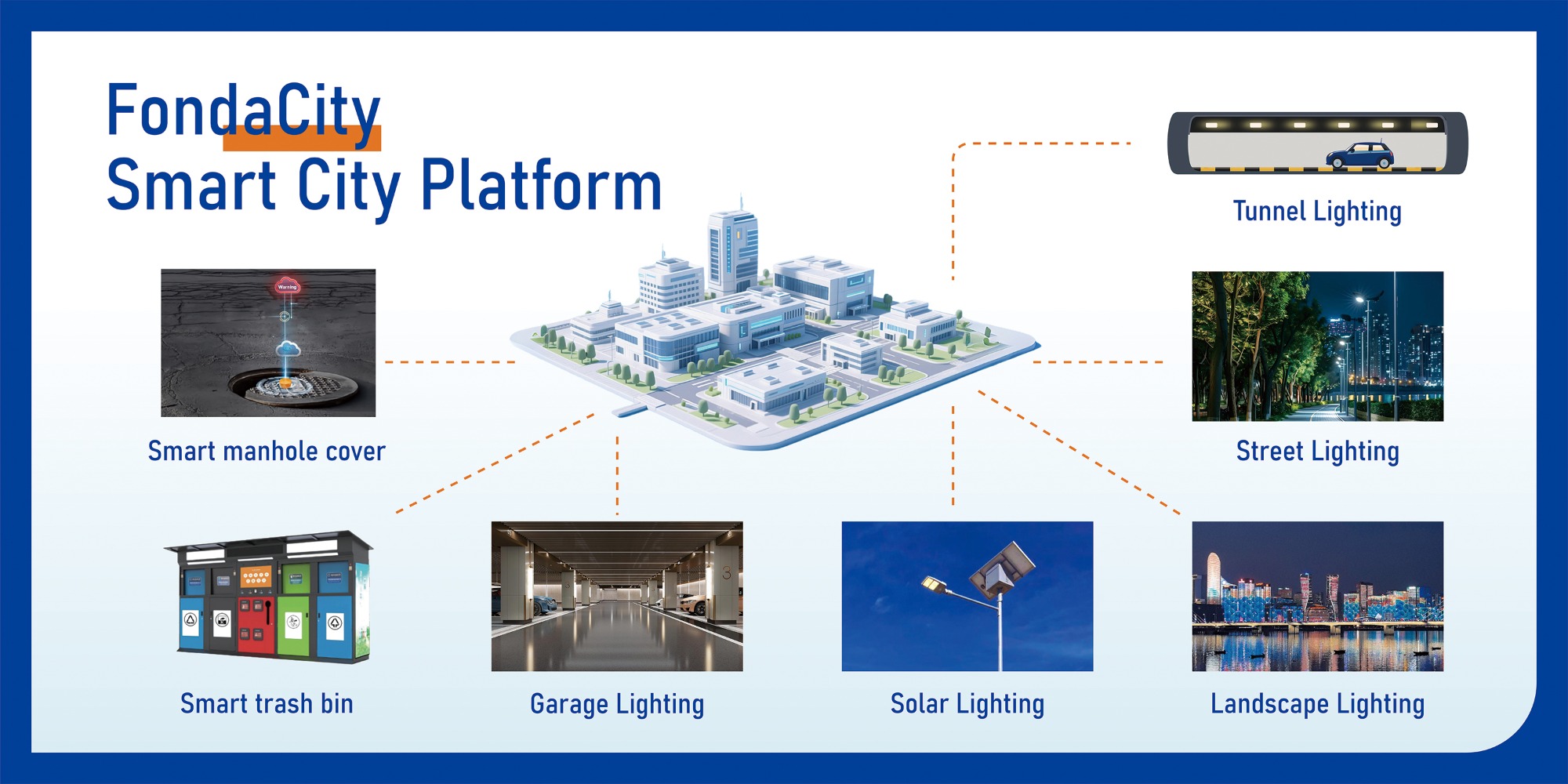
6. How to achieve long-term operation and maintenance and fault early warning of Smart Street Lighting?
Long-term operation and maintenance requires establishing a "predictive maintenance + rapid response" mechanism:
- Use an AI predictive maintenance model to predict lamp service life and potential faults by monitoring parameters such as current fluctuations and energy consumption changes.
- Realize automatic fault alarm and precise positioning through the cloud platform, and formulate an emergency response process within 30 minutes.
- Conduct regular basic maintenance: clean solar panels, detect grounding resistance (≤4Ω), and check surge protection devices (SPD).
- Establish an operation and maintenance data archive, record equipment operation parameters and fault handling, and optimize subsequent maintenance strategies.
7. How do solar-powered intelligent street lamps ensure lighting during consecutive rainy days?
Lighting is guaranteed through "energy management optimization + hardware redundancy design":
- The intelligent system real-time monitors battery power and automatically enters super energy-saving mode during consecutive rainy days to reduce brightness in non-essential periods.
- Adjust the lighting strategy in advance based on weather forecast data and reserve emergency power.
- In terms of hardware configuration, select high-efficiency solar panels and large-capacity batteries, and design redundant capacity according to the number of local rainy days.
- Add auxiliary power supply interfaces when necessary to ensure uninterrupted lighting in key areas under extreme weather.
8. How to calculate the investment cost and payback period of Smart Street Lighting?
Investment costs include hardware procurement (lamp poles, lamps, sensors, controllers), engineering construction and platform construction, with unit price differences based on functional configurations.
The payback period mainly relies on energy-saving benefits and value-added services:
- Intelligent dimming can save 30%-70% of energy consumption.
- Remote operation and maintenance reduces labor costs, and fault handling efficiency is improved by more than 60%.
- Value-added services (advertising, data services, charging pile fees) can further shorten the payback period, which is generally 3-5 years, depending on the application scenario and operation mode.
 FONDA Showcases Smart Lighting Innovations at Hong Kong Outdoor & Tech Light Expo Press Conference
 From Solar Lighting to Intelligent Operations: Fonda Tech Enables Smarter Lighting Management in Kuwait
 China-Africa Digital Cooperation | Smart Pole & Smart City Infrastructure
 FondaCity Unveils Its Latest AIoT Cloud Platform Release




