In the quest for sustainable urban development, smart street lights have emerged as a pivotal technology, significantly contributing to energy conservation and emission reduction. By leveraging advanced sensing, communication, and control technologies, these intelligent lighting systems are transforming traditional street lighting into a more efficient, adaptable, and environmentally friendly solution. This article delves into the mechanisms through which smart street lights achieve their remarkable energy-saving and emission-reduction capabilities.
1. Adaptive Lighting Control
One of the core features of smart street lights is their ability to adapt to changing conditions. Equipped with sensors such as photosensors and motion detectors, these lights can dynamically adjust their brightness levels based on ambient light conditions and the presence of pedestrians or vehicles. For instance, during daylight hours or in well-lit areas, the lights dim or turn off completely, while in darker or high-traffic zones, they brighten up as needed. This adaptive behavior ensures that energy is only consumed when and where it is necessary, drastically reducing energy waste.
2. Efficient LED Technology
Smart street lights typically incorporate LED (Light Emitting Diode) technology, which is known for its high efficiency and long lifespan compared to traditional lighting sources like incandescent or fluorescent lamps. LEDs convert a higher percentage of electrical energy into light, minimizing heat loss and thereby consuming less power. Furthermore, their durability means less frequent replacements, reducing both material consumption and maintenance costs.
3. Centralized Management and Monitoring
A key advantage of smart street lights is their integration into a centralized management system. This allows city authorities to remotely monitor and control each light, optimizing lighting schedules, identifying faulty units, and implementing energy-saving strategies across the entire network. Real-time data analytics enable predictive maintenance, reducing downtime and further enhancing energy efficiency.
4. Renewable Energy Integration
Many smart street light systems are designed to harness renewable energy sources, such as solar power and wind energy. Solar panels integrated into the light poles can generate electricity during daylight hours, storing it in batteries for use at night or during cloudy periods.
5. Intelligent Grid Integration
Smart street lights can also communicate with the electricity grid, enabling demand-side management. During peak demand periods, the lights can be automatically dimmed or turned off temporarily to reduce the overall load on the grid, helping to balance supply and demand without compromising safety.
Conclusion
Smart street lights represent a significant leap forward in urban lighting, combining advanced technologies to achieve substantial energy savings and emission reductions. By adapting to environmental conditions, utilizing efficient lighting technologies, enabling centralized management, integrating renewable energy, and interacting with the smart grid, these intelligent systems are not only enhancing public safety and convenience but also contributing to a more sustainable future. As cities continue to grow and urbanization accelerates, the widespread adoption of smart street lights will be crucial in mitigating the environmental impact of lighting while fostering the development of smarter, more livable cities.

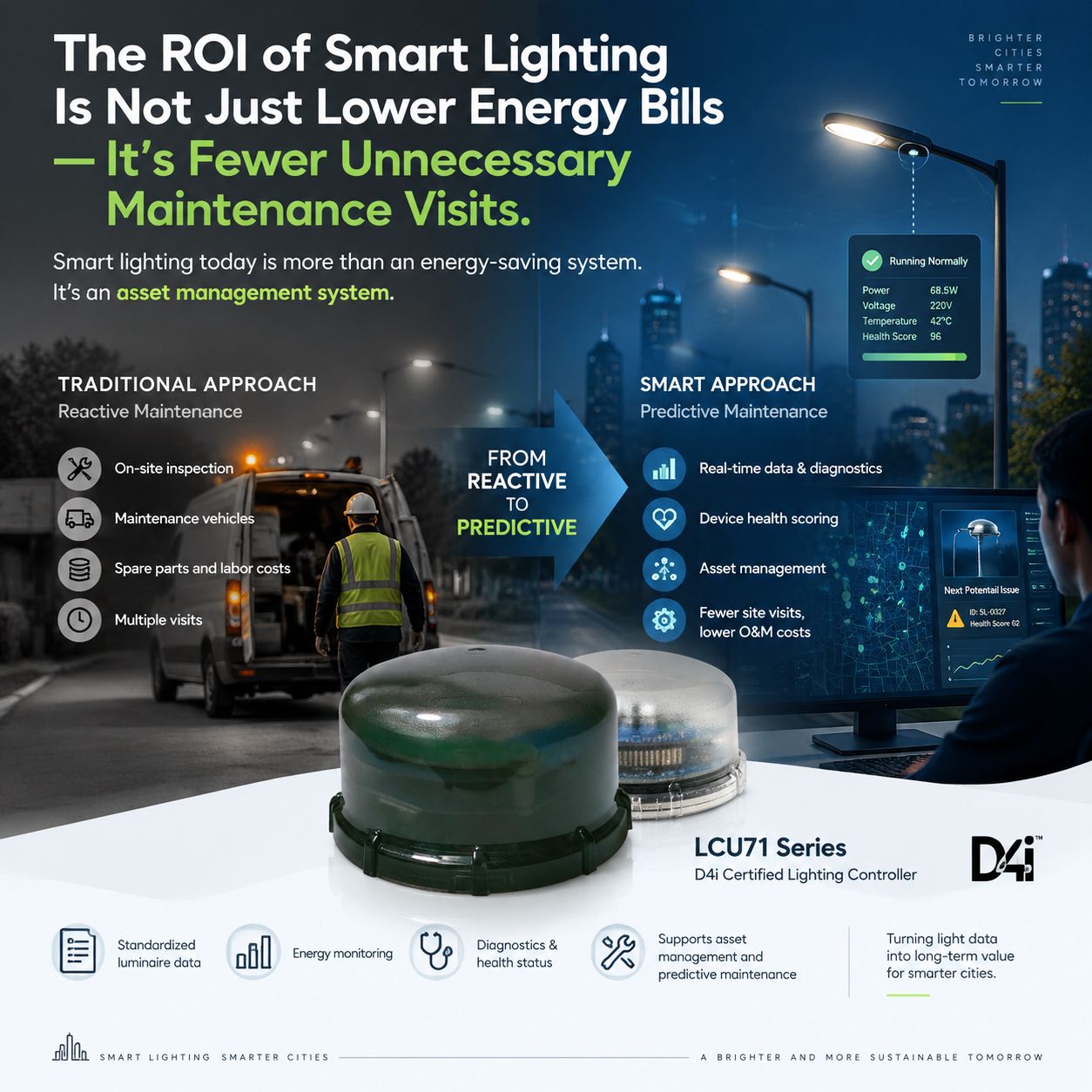 The New ROI of Smart Lighting: Beyond Energy Savings, Predictive Maintenance Cuts Operational Costs
 FONDA Showcases Smart Lighting Innovations at Hong Kong Outdoor & Tech Light Expo Press Conference
 From Solar Lighting to Intelligent Operations: Fonda Tech Enables Smarter Lighting Management in Kuwait
 China-Africa Digital Cooperation | Smart Pole & Smart City Infrastructure




