LoRaWAN or LoRa-Mesh? The Right Choice Depends on Your Smart Street Lighting Project
When designing smart street lighting systems, one critical decision determines project cost, coverage stability and long-term maintenance efficiency: selecting between LoRaWAN and LoRa-Mesh IoT communication architectures. Many municipal contractors, smart city integrators and lighting manufacturers struggle to tell which protocol fits their road, highway, rural or urban lighting rollouts — and the truth is clear: there is no universal one-size-fits-all communication setup for every smart street lighting deployment.
Real-World Project Cases: Our Two European Smart Lighting Deployments
We have delivered dozens of cross-border smart street lighting projects across Europe, Southeast Asia and the Middle East, and our two representative cases fully show the core difference between LoRaWAN and LoRa-Mesh.
- Greece Urban Smart Street Lighting: LoRaWAN Deployment For a large-scale downtown street lighting renovation project in Greece, we finalized LoRaWAN as the core communication solution. The city features dense, evenly distributed lamp posts, complete municipal network infrastructure, and unified central cloud management demands. LoRaWAN’s star topology delivers efficient wide-area LPWAN connectivity, supporting centralized network management, unified single lamp dimming control, real-time power consumption statistics and fault alert synchronization on one cloud platform. All street light controllers directly communicate with central gateways, making batch parameter configuration, remote firmware upgrade and city-wide lighting scheduling much easier for municipal operators.
- Serbia Suburban & Rural Lighting: LoRa-Mesh Deployment Our Serbia smart street lighting project covers scattered suburban roads, winding mountain highways and remote village lighting zones, with many signal shielding obstacles like tall trees, hills and low-rise buildings. Local gateway laying cost would be extremely high if we adopted LoRaWAN. Under this site condition, we chose LoRa-Mesh self-organizing mesh network. Every street lamp acts as both a terminal controller and a relay node, enabling flexible lamp-to-lamp peer communication. Signals auto jump through adjacent light nodes to bypass coverage blind spots, removing the need to install extra gateways in hard-to-reach zones. Even if individual lamps break down, the network will auto reroute data to guarantee continuous lighting control.
3 Core Questions to Judge LoRaWAN or LoRa-Mesh Before Deployment
Before locking your smart lighting communication solution, evaluate your project against these three decisive factors to avoid overspending or coverage failure: ① How are the lighting points geographically distributed? Evenly arranged urban main roads, centralized city blocks suit LoRaWAN; scattered rural roads, winding mountain lanes, fragmented suburban lamp layouts match LoRa-Mesh better. ② Where are the potential coverage challenges? Are there heavy signal barriers (mountains, dense foliage, old building clusters)? Will blank signal zones appear far from gateways? LoRa-Mesh multi-hop relay eliminates dead zones, while LoRaWAN relies fully on gateway signal coverage. ③ How will the lighting network be managed and maintained over the long term? Do local teams need unified centralized cloud supervision for thousands of lamps? Or low-infrastructure, on-site self-repair network for remote areas? LoRaWAN simplifies large-scale centralized O&M; LoRa-Mesh cuts long-term gateway maintenance and construction costs.
Core Advantages Breakdown: LoRaWAN VS LoRa-Mesh for Smart Street Lights
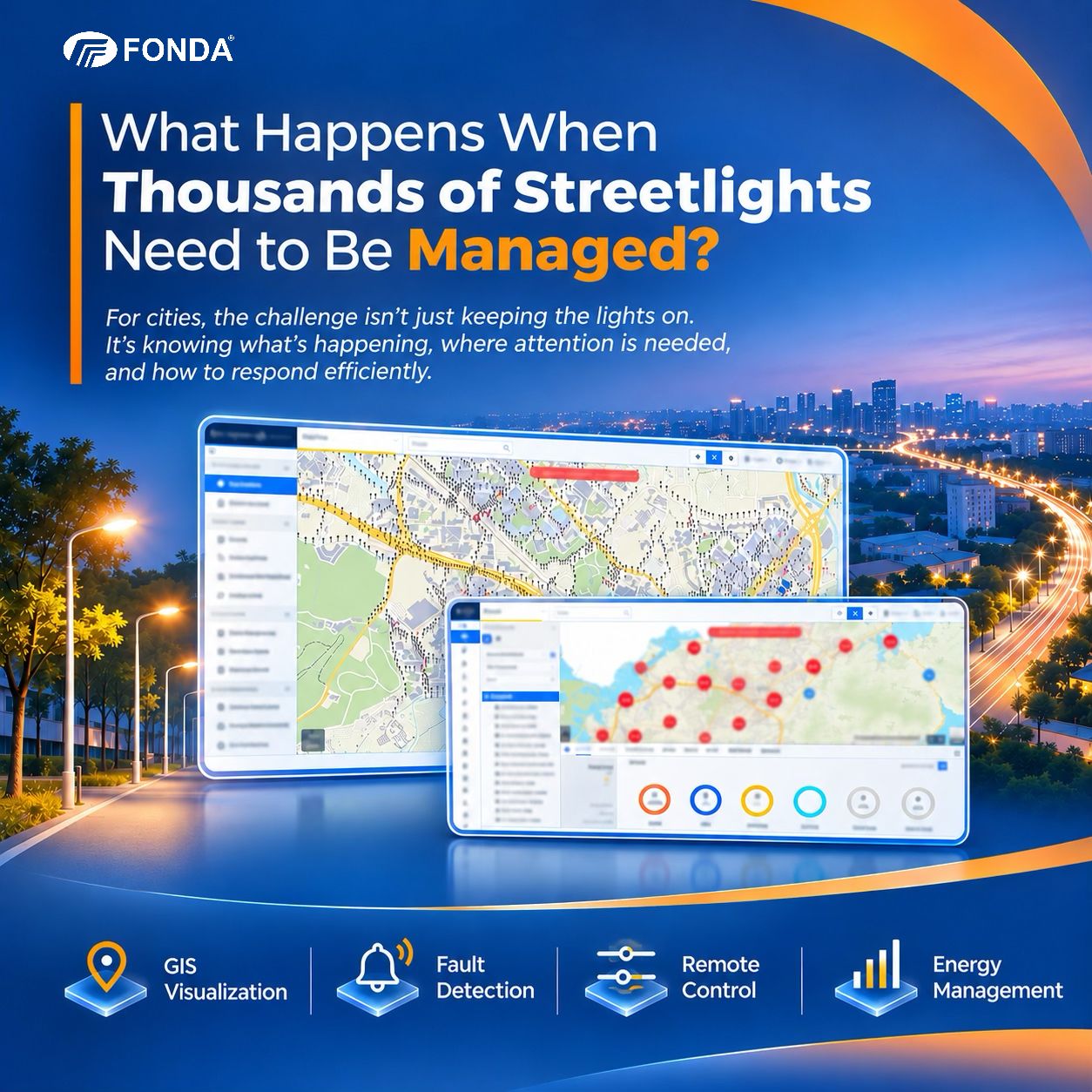 Smart Street Lighting Management for Smart Cities
 Smart Lighting for Golf Courses: Enhancing Night Golf Experiences