For solar street light users, technical specifications matter less than practical results. The most common concerns are simple yet critical: Will it turn on reliably? How long will it last? Is it easy to manage? Does it truly save money?The solar charge controller—often overlooked—is the key component that directly addresses these concerns. This article examines how modern controllers solve four core user pain points.
1. Solving the "No Light on Rainy Days" Problem
The most frustrating issue is when lights fail during consecutive cloudy or rainy days. Traditional controllers lose charging efficiency under low light, leading to battery drain. Modern controllers, especially those with Maximum Power Point Tracking (MPPT) technology, solve this by continuously optimizing the power harvest from solar panels. Even in overcast conditions, MPPT controllers can increase energy harvest by 15-30% compared to basic PWM types. Coupled with smart discharge strategies—like automatically reducing brightness or shortening operation hours during low-battery states—they ensure 3-5 days of continuous operation in poor weather. When selecting, prioritize controllers with a high MPPT efficiency (≥99%) and a wide input voltage range.
2. Extending Battery Life, Reducing Replacement Costs
The battery is the most expensive consumable component. Users rightfully worry about frequent replacements. A quality controller extends battery lifespan through three core protections:
Overcharge Protection: Switches to float charging once the battery is full, preventing damage and "bulging."
Over-discharge Protection: Cuts off the load when voltage drops too low, preventing deep discharge that permanently reduces capacity.
Temperature Compensation: Adjusts charging voltage based on ambient temperature, preventing overcharging in heat and undercharging in cold.
Controllers with 3-stage charging (bulk, absorption, float) and temperature compensation can extend battery life from 2-3 years to 5-8 years, offering significant long-term savings.
3. Enabling "Light on Demand" for Maximum Efficiency
Users want lights bright enough when needed and dim when not, maximizing both convenience and savings. Intelligent controllers achieve this through:
Dual Control: Combines dusk-to-dawn operation with programmable timer settings.
Motion Sensors: Activates full brightness when movement is detected, reverting to power-saving dim mode otherwise.
Programmable Dimming: Allows multi-level brightness scheduling (e.g., 100% in early evening, 30% after midnight).
Field data shows such strategies can reduce energy consumption by 30-50% compared to all-night full-power operation, which in turn allows for smaller, more cost-effective solar and battery systems.

4. Simplifying Maintenance and Reducing Operational Costs
Maintenance in remote or widespread installations is a major hurdle. Smart controllers tackle this through connectivity:
Remote Monitoring (4G/NB-IoT): Real-time access to system status (voltages, currents, charging state) via smartphone or computer.
Fault Alarms: Automatic alerts for issues like battery failure or panel faults, enabling targeted repairs.
Remote Configuration: Adjust lighting schedules, brightness, and modes without physical access.
Some advanced models include data logging and self-diagnostic features, further simplifying troubleshooting and preventive maintenance.
5. User-Centric Selection and Usage Tips
Proper Sizing: Solar street light controller's current rating should exceed the solar panel's short-circuit current by at least 20%.
Feature Match: Choose based on application—basic photocell + timer for rural roads; remote management for city streets; color tuning for landscape lighting.
Build Quality: For outdoor durability, select controllers with a rating of IP65 or higher for dust and water resistance.
Brand & Certification: Opt for reputable brands with international certifications (UL, CE, TUV). Verify that essential protections (overcharge/over-discharge/temperature) are included.
Routine Checks: Inspect connections quarterly, keep solar panels clean, and periodically check battery voltage.
A solar street light controller is more than a technical component; it is the key to a reliable, efficient, and cost-effective lighting solution. By directly addressing the real-world problems of reliability, battery life, energy waste, and maintenance difficulty, the right controller transforms a solar street light from a simple installation into a truly "install-and-forget" asset. For the end-user, investing in a capable controller is an investment in long-term performance and peace of mind.
 FondaCity Unveils Its Latest AIoT Cloud Platform Release
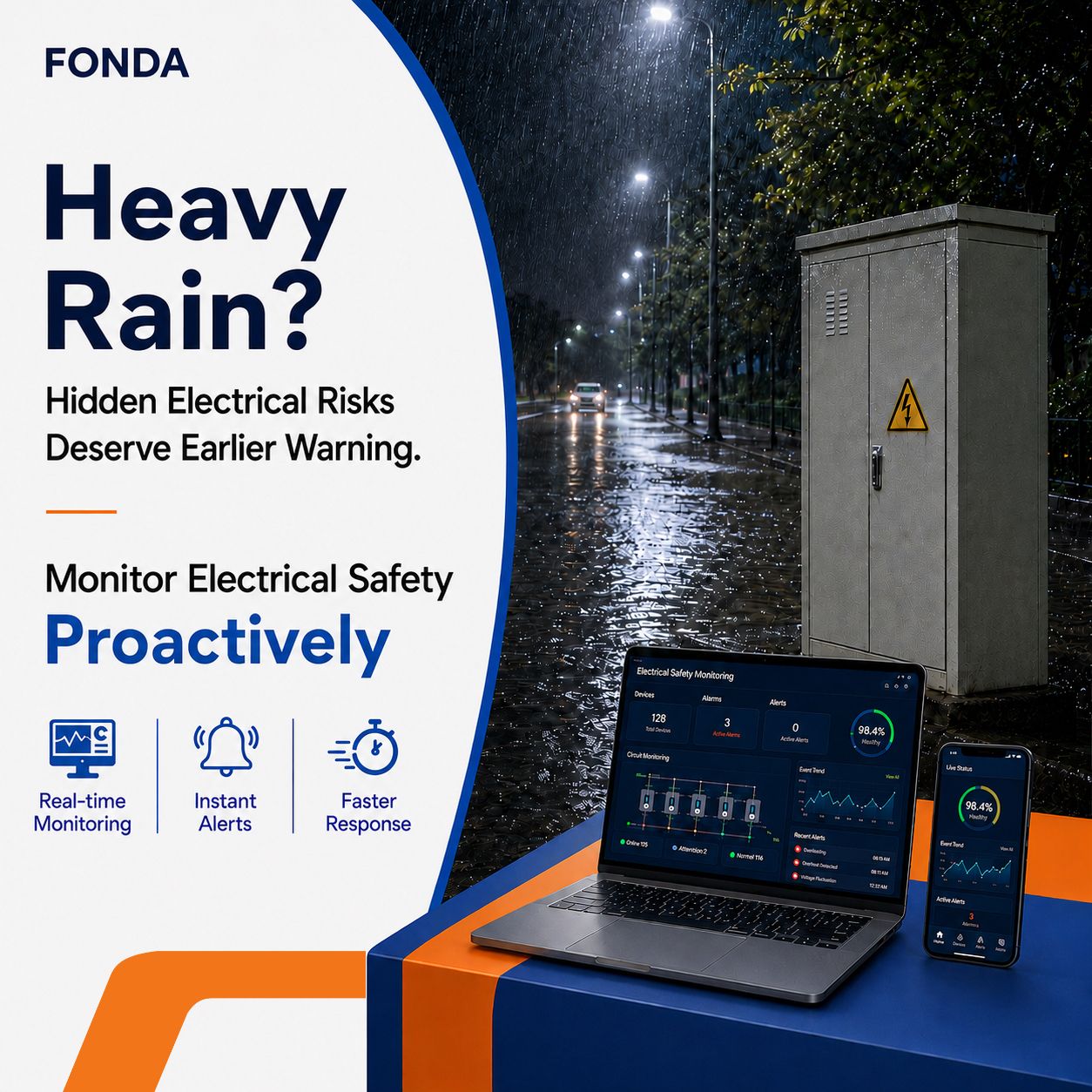 Extreme Weather Electrical Safety Monitoring | Urban Infrastructure Risk Solution
 FONDA Smart Lighting Project Improves Road Safety in El Salvador




