Smart street light controllers are the core components of intelligent lighting systems, enabling cities to enhance energy efficiency, reduce operational costs, and improve public safety. These devices act as the "brain" of each streetlight, allowing precise control, automation, and remote management. Below, we explore their key functions and benefits.
1. Energy Efficiency & Cost Savings
Traditional streetlights operate on fixed schedules, often wasting electricity. Smart controllers optimize energy usage by:
Automatic Dimming: Adjusting brightness based on real-time conditions (e.g., reducing light levels during low-traffic hours).
Motion-Activated Lighting: Increasing illumination only when pedestrians or vehicles are detected.
Sunrise/Sunset Synchronization: Turning lights on/off based on natural light levels rather than fixed timers.
These features can reduce energy consumption by 30-70%, significantly lowering municipal electricity bills.
2. Remote Monitoring & Control
Smart controllers connect to central management systems via IoT networks (LoRaWAN, NB-IoT, 4G/5G, Zigbee), enabling:
Real-time status monitoring (ON/OFF, brightness, power consumption).
Remote troubleshooting (detecting burnt-out bulbs or electrical faults).
Group control (adjusting entire streets or zones simultaneously).
This eliminates the need for manual inspections, reducing maintenance costs and response times.

3. Fault Detection & Predictive Maintenance
Smart controllers continuously monitor system health and can:
Detect lamp failures, voltage fluctuations, or wiring issues.
Send instant alerts to maintenance teams for rapid repairs.
Log historical data to predict future failures, preventing unexpected outages.
This proactive approach extends the lifespan of lighting infrastructure.
4. Integration with Smart City Systems
Beyond lighting, controllers can support:
Traffic & pedestrian sensors for adaptive lighting in high-activity zones.
Environmental monitoring (air quality, noise levels).
EV charging stations or surveillance cameras, turning streetlights into multi-functional urban assets.
5. Enhanced Public Safety
Smart controllers improve urban safety by:
Ensuring consistent illumination in critical areas (crosswalks, alleys).
Increasing brightness during emergencies or accidents.
Reducing dark spots caused by faulty lights.
Smart street light controllers play a vital role in modern urban infrastructure, transforming traditional lighting into adaptive, energy-efficient, and connected systems. By enabling remote control, automation, and smart city integration, they help municipalities cut costs, reduce carbon footprints, and create safer, more sustainable communities.

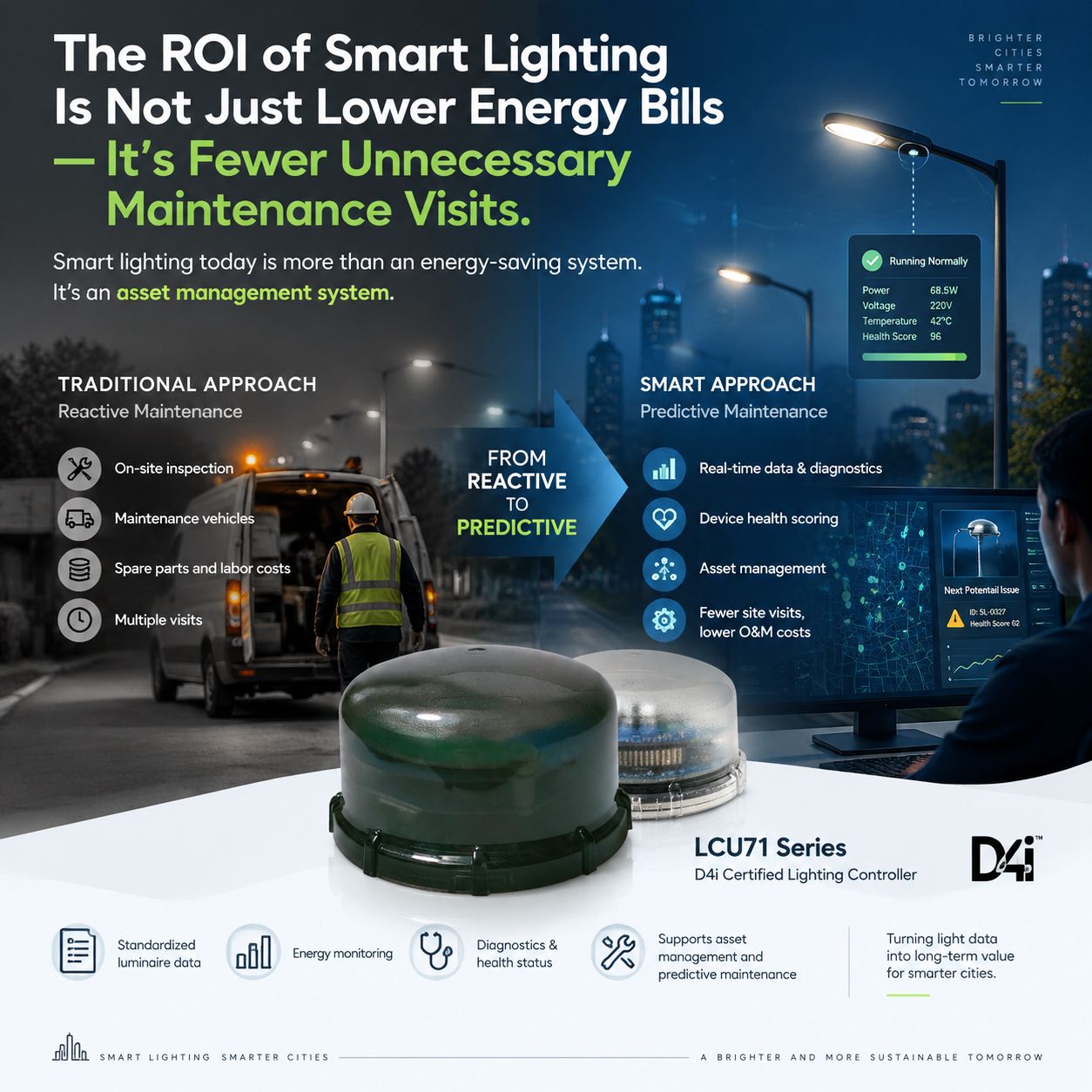 The New ROI of Smart Lighting: Beyond Energy Savings, Predictive Maintenance Cuts Operational Costs
 FONDA Showcases Smart Lighting Innovations at Hong Kong Outdoor & Tech Light Expo Press Conference
 From Solar Lighting to Intelligent Operations: Fonda Tech Enables Smarter Lighting Management in Kuwait
 China-Africa Digital Cooperation | Smart Pole & Smart City Infrastructure




